Methodology
Developing players, not just winning seasons
My methodology starts with one question: why do countries smaller than Nuevo León produce more talent?
It's not about size
Countries with under 6 million people that keep producing elite players.
Nuevo León has nearly 6 million. The talent is here. What makes the difference is how we develop it.
The models I study
Belgium, with about 11.7 million people, shows that player development can be fixed: after a poor Euro 2000, it overhauled its youth system, and by 2015 it was ranked No. 1 in the world. Croatia, with under 4 million, has been producing talent for decades, and Dinamo Zagreb runs one of the most respected academies in Europe. I've studied Croatian football and the Anderlecht, Club Brugge, and Dinamo Zagreb academies closely, and they're the foundation of how I built my methodology.
My principles
Level over age.
A birthday doesn't make a player ready. Showing it with the ball and in games does. Once players prove it, they need to move up, because players who aren't challenged stop improving.
Ball first, system second.
No tactic works without technique. The younger or less experienced the player, the more touches they need. Tactics come once a player is confident on the ball.
Bad reps build bad habits.
Every skill is a pattern the brain builds through repetition. Clean reps hold up under pressure. Sloppy ones don't.
See it before you decide.
Top players don't see more than everyone else. They know what to look for. Scanning and anticipation can be coached, too.
Creativity can be coached.
Nobody creates out of nothing. Creative players copy, combine, and take risks. My job is to give them examples and the freedom to try.
The four pillars
Personal
The player and the ball
The work nobody sees: at home, before or after practice, on weekends. This is where players rack up the reps that build technique.
Individual
Player, ball, and coach
Detail and correction. Clear feedback on what to do, when, and how, at the right level of difficulty to keep learning.
Group
Player, teammates, and coach
Where technique turns into decisions: small-sided games, opposition that builds step by step, and real game situations.
Football culture
The player and the game
Watching games, knowing the legends, and understanding why they made the choices they did. Players who know the game see more solutions.
Four levels
As players move up, individual work gives way to team play, and the game format grows with them. Players move up once they've shown it, both technically and in games.
| Level | Game format |
|---|---|
| Beginner | 3v3 |
| Intermediate | 5v5 |
| Advanced | 9v9 |
| Expert | 11v11 |
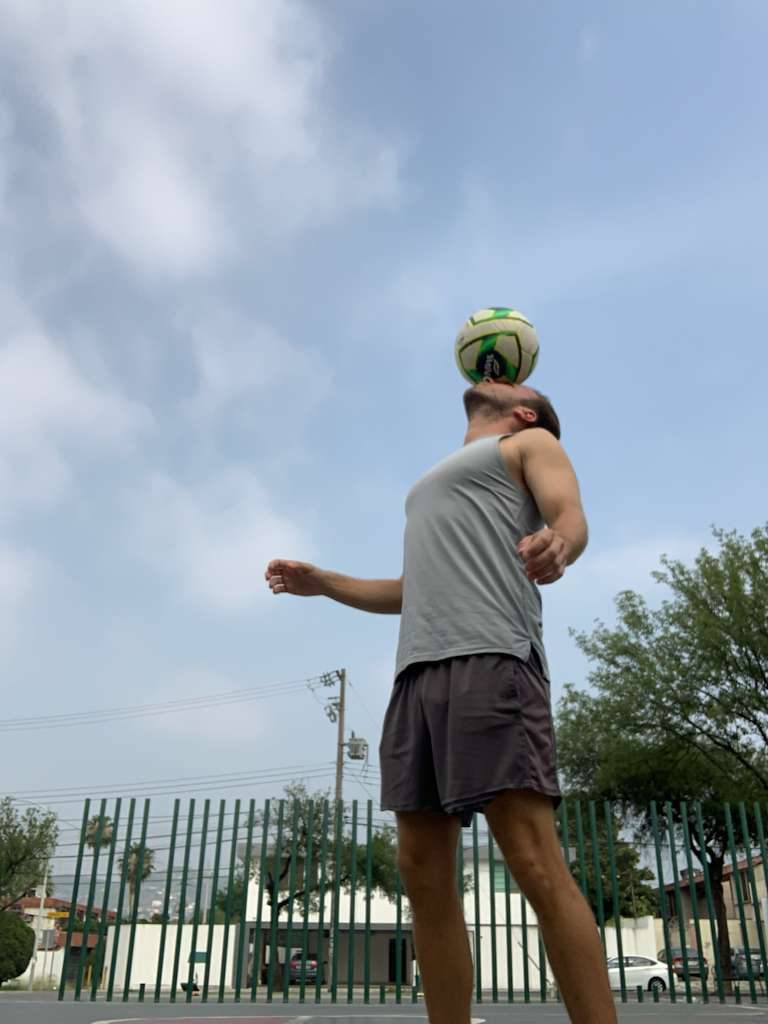
Putting it into practice: the Skills Challenge
A program I created so development doesn't stop when practice ends: skills from the game's legends, weekly videos from home, and feedback against clear criteria.
See the project